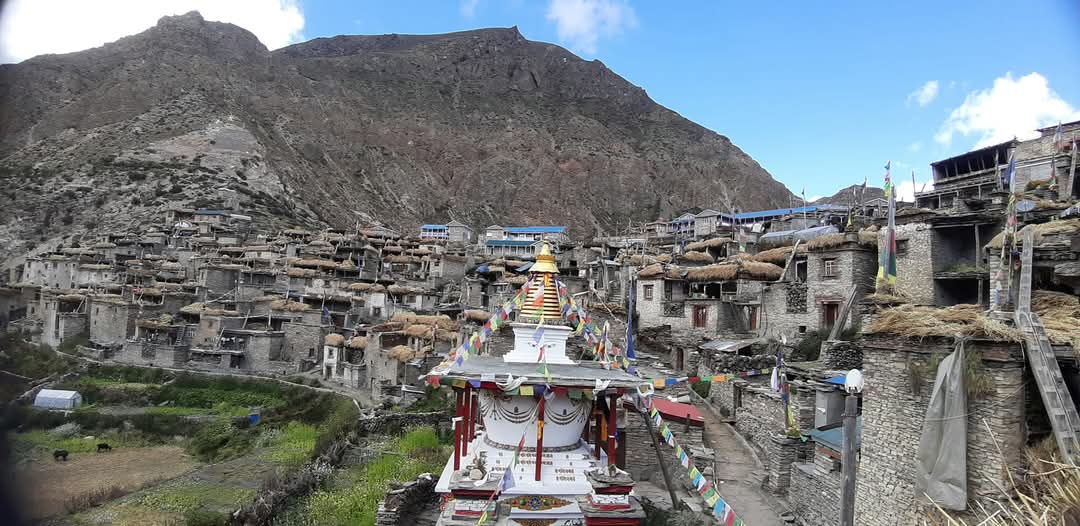
Naar Phu Valley

Nepal
Annapurna Region
Duration

23 Days

Group Size
Grade

Difficult

Max. Altitude

5450 m

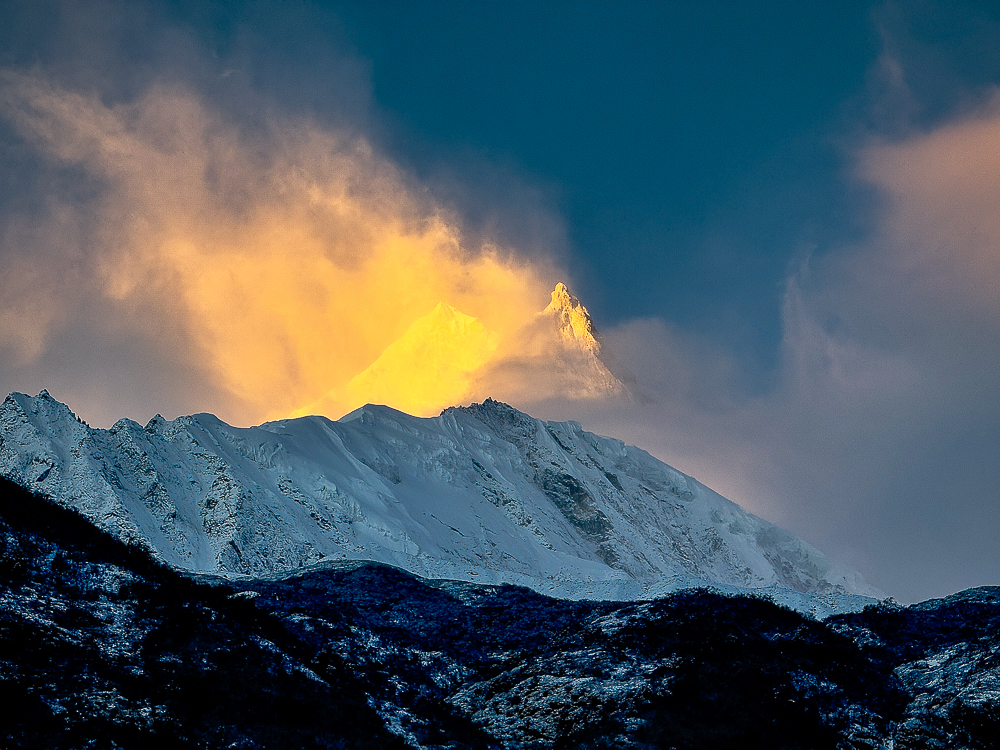
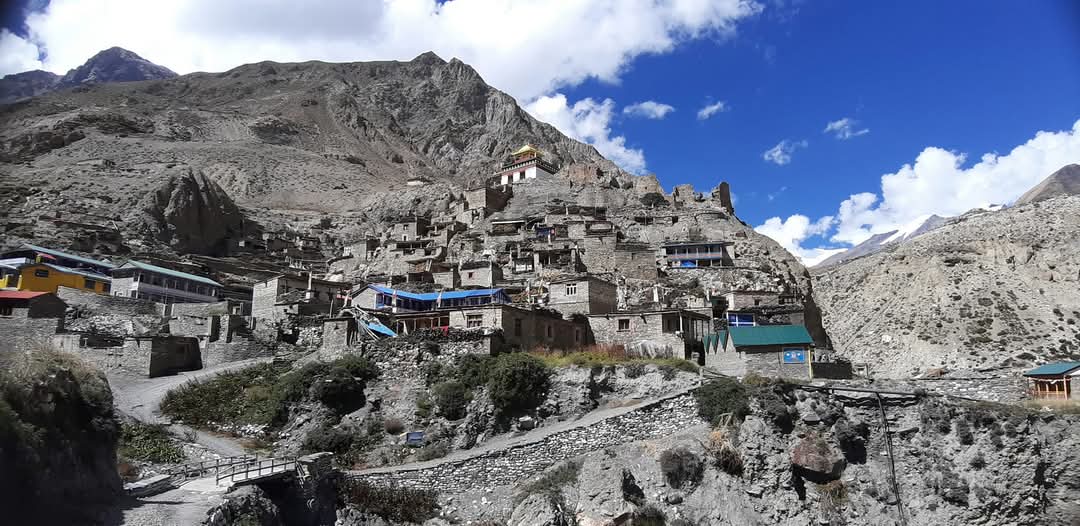
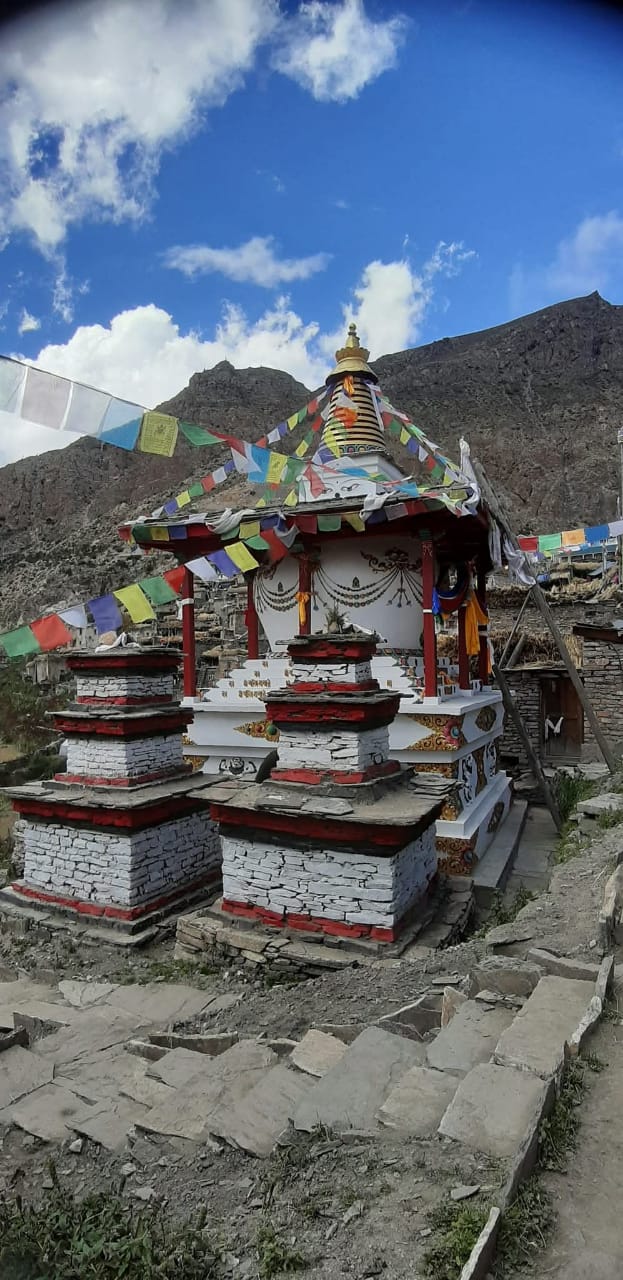
A fantastic journey in a wild and unexplored area located north of Annapurna: the Nar Phu Valley. This trek is perfect for travelers who want to discover the Annapurna circuit as well as explore an untouched valley. A rough and wild trek, this trek takes you to the exotic Nar Phu valley that lies in the remote corner of the Annapurna region. Opened to visitors only in the year 2003, the Nar Phu valley remains untouched by modernity. The inhabitants, who roughly comprises of about 350 Nepalese Tibetans, have retained their age old practices. Most of them are engaged in yak herding and farming. This trek also offers fantastic views of the Annapurna massif, Lamjung Himal, Machhapuchhre Himal, Manaslu Himal, Dhaulagiri range and Tilicho peak. As the trekking route is frequented by few trekkers, you can look ahead for a ‘just the mountains, nature and us’ experience.

Places you'll See

Highlights

Map & Itinerary

It is a panoramic thrill flying into Kathmandu on a clear day. The views of snow-capped mountain peaks sprawling down below you are almost ecstatic, beginning a whole chain of memorable experiences that stay with you for a long, long time. A representative and driver from Explorer Nepal will meet you at the airport and escort you to Hotel. At the hotel you will be briefed about your daily activities.
Check In at the Hotel.
After breakfast at the hotel, commence the sightseeing tour of Kathmandu city, Swayambhunath and Patan city. Kathmandu city: Kasthamandap, the source of the name Kathmandu means ‘made from the timber of a single tree’. Also known as Kantipur, the capital Kathmandu is the hub of Nepal’s art and culture. It is a place for rest, relaxation and easy-day sightseeing of historic and artistic temples and monuments. Kathmandu Durbar Square with its arrays of temples, Seto Machhindranath and the ancient palace of the former Nepali Royals enriches your experience of the centuries old civilization. Swayambhunath Stupa: Said to be around 2000 years old, this Buddhist Stupa sits atop a hill. The main stupa is composed of a solid hemisphere of brick and earth supporting a lofty conical spire crowned by a pinnacle of Copper gilt. Painted on the four sided base of the spire are the all seeing eyes of Lord Buddha. The hill of Swayambhunath is a mosaic of small Chaityas and Pagoda temples. You’ll get a scenic view of Kathmandu city from there. Patan city: Located about 5 km south of Kathmandu, Patan is one of 3 royal cities in the valley. A destination for connoisseurs of fine arts, Patan is filled with wood and stone carvings, metal statues, ornate architecture, including dozens of Buddhist and Hindu temples, and over 1200 monuments. Patan is believed to have been built in the third century B.C. by the Kirat dynasty later expanded and enriched by the Licchavi and the Malla rulers in the medieval period. Patan Durbar Square, like its counterpart in Kathmandu, is an enchanting mélange of palace buildings, artistic courtyards and graceful pagoda temples. The former Royal palace complex is the centre of Patan’s religious and social life, and houses a beautiful museum. One remarkable monument here is 16th century temples dedicated to the Hindu go Krishna, built entirely of stone.
Check In at the Hotel.
We drive for approximately 6 hours along the Kathmandu-Pokhara Highway to Dumre and then follow the rough road by the Marshyangdi river to Besi Sahar.
Overnight at Guest House
Leaving Khudi we pass a school and a forest nursery, as the trail continues northwards up the Marshyangdi Valley. After crossing a suspension bridge at Bhulbule, the trail passes a cascading waterfall and rice terraces with the magnificent views of Manaslu serving as a backdrop. Following a gentle incline we come to the village of Ngadi with its shops and teahouses. From here, the trail continues to ascend towards Bahundanda. Bahundanda literally means “Hill of the Brahmins” and it is the most northerly Brahmin settlement in the Marshyangdi Valley. It is situated on a long ridge and we camp in terraced fields near the village.
Overnight at Guest House
A steep trail descends from Bahundanda, through rice terraces, before crossing a stream at the bottom of a small waterfall. It then climbs again and traverses the hillside high above the river before reaching the village of Hani Gaon. Ahead, the Marshyangdi valley forms a steep V-shape, and we follow the winding mountain path down through Syange and along the river for some distance. The trail then climbs steeply and the path is cut into the sheer cliff-face some 200-300m above the riverbed. Eventually we descend to the stone village of Jagat, situated on a shelf which juts into the precipitous Marshyangdi valley.
Overnight at Guest House
The trail from Jagat descends until it almost reaches the river and then begins to climb again through a forest. The sheer cliff on the opposite bank plunges downward but this side is also steep. When the climb ends, we follow a level track to Chyamje. There is a magnificent waterfall on the opposite bank. After descending to the river and crossing a suspension bridge, we begin a climb to Sattale on a path so steep that it seems one slip would send you hurtling down into the valley. We continue on an undulating path above the river, and at one point, where a tributary flows in from the opposite bank, the main river becomes covered with huge boulders that hide the water. Climbing the zigzag path to the top of the hill, we see the level, plain of Tal before us. Though it is enclosed by cliffs, the level area looks reassuring after the harrowing mountain paths just travelled on. We descend to a grassy riverbank which leads to Tal with its hotels and teahouses. Beyond Tal, the valley narrows and the path becomes high and winding, and in several areas seems hewn from the rock itself. Beyond the small village of Karte, there is a bit more cliff-walking before the path drops again to the river. We cross a suspension bridge, and climb the short distance to the stone mani marking the entrance to Dharapani.
Overnight at Guest House
As we cut through a narrow field from the village, the Dudh Khola, which originates from the south face of Manaslu, enters on the opposite bank. The Marshyangdi then veers to the left, and as Annapurna II becomes visible ahead, we arrive at Bagarchhap, a Bhotia village with prayer flags fluttering in the breeze. Continuing to climb through forests of pine and oak, we pass through Dhanakyu before coming to a thundering waterfall. Further on, the Marshyangdi Khola enters a gorge and the path consists of steep stone steps. Pausing for breath, we can look back for views of Manaslu. When the steep incline ends we follow a path amid magnificent rhododendrons to Ratamron and then continue on a gently rising path, crossing a stream before entering a pine forest. We then cut across a loose hillside to the hamlet of Koto (2600 m) from where we can look straight up at the magnificent Annapurna II.
Overnight at Guest House
This is also where we leave the Annapurna Circuit, we cross the Marshyangdi river and enter the Narphu valley. Most of this first day in the Nar Phu valley we walk on small jungle paths, which is quite a change from the bigger trail around Annapurna. The first part is up and down and then we have a short steep ascent to Choto (9372ft/2840m). We then have lots of steep ups and downs and the path is quite exposed above the Nar Phu Khola. At the altitude of 10197ft/3090m we cross a suspension bridge, here the valley is very narrow and just before the bridge there are some hot-springs. The rock carved path now becomes very exiting; both because of danger, but also because there are some big waterfalls. We climb to a two storied hut at Sinhenge Dharamsala, where we set camp for the night.
Overnight at Guest House
We begin the day by crossing Methang Khola River and then start a breathtaking climb on a winding path to the Methang pastures. Here at Methang there is an ancient Chorten and marvelous views of Kang Guru. Further on we pass the abandoned Methang village (3560m), from the village there is a path to Kang Guru BC. The path to the next village Junan is easy and flat, Junan is also abandoned. From here we continue to have an easy walk to Lower Chaku village, which has about 15 houses. We continue to Upper Chaku on a steep trail.
Overnight at Guest House
This day begins with a hard steep ascent to the abandoned Kyan village Vhaku, where there is a nice long mani wall. We continue on an amazing tunnel carved rocky path 231 fit/70 meters above the river and then decent to the riverbed, we follow the riverbed and pass some Mani Chrotens. We then climb up from the riverbed to the Phu valley entrance door (Phuohi Yalgoe). About an hour from the valley entrance we cross the Phu Khola and begin climbing up to the village. Phu village consists of about 30 houses, which are home to 100-150 people. We camp near the river.
Overnight at Guest House
We rest here for a day, have a look at the village and might go exploring a little further up in the valley.
Overnight at Guest House
To get to Naar we have to go back down the valley, we pass Chaku and walk on for a couple of hours before we cross the Phu Khola at Naar Phedi (two bridges to Naar). From here we climb up to a very nice grassy campsite.
Overnight at Guest House
From our campsite it is a steep couple of hours climb to Naar Village (4110m), we have lunch here near the village, so we can take a look at it before we walk on. We continue on a long but gentle ascent through the lateral moraine of Temdenzon Khola, on a nice path. At the bottom of Kang La, we camp on a nice grassy spot.
Overnight at Guest House
Today we have a long and hard day ahead of us, however it is very rewarding. We have to cross the big Kang La pass (5280m). It is a very steep ascent to the top of the pass where there is a chorten and some great views of the Annapurna massif. Just before reaching the pass, there is a small lake where we take a rest before making the last effort to reach the top. From the top of the pass it is a very steep decent, but after an hour we take a grassy path that leads to Ngawal.
Overnight at Guest House
This day we go more slow. The trail hikes along with the dry and deserts section. Less vegetation area, we suggest you to take more liquid and boiled meals on this higher elevation. Drink at least more than 3 liters of water in a day.
Overnight at Guest House
Leaving Letdar, we climb gradually to a ridge before descending to the headwaters of the Marshyangdi and crossing via a covered wooden bridge. After a short ascent up the mountain path on the right bank, we follow a narrow trail across an unstable scree slope and then descend to Thorung Phedi.
Overnight at Guest House
We begin the trek early today for crossing the Thorung La [5416m]. The trail becomes steep immediately on leaving camp but as this trail has been used by local people for hundreds of years the path is well defined. The gradient then eases and after around 4 hours of steady climbing we reach the chorten and prayer flags of the pass. The views are dramatic, from the snow covered mountains above, to the head of the Kali Gandaki valley below and the brown and purple hills of Mustang which spread out before us. The descent to Muktinath is a tiring and knee pounding journey but it’s compensated for with excellent views of Dhaulagiri. Eventually the moraines give way to grassy slopes before a pleasant walk along the Jhong Khola Valley to Muktinath and its shrines and temple.
Overnight at Guest House
We now begin the descent down the dramatic Kali Gandaki valley, initially through arid country in the same geographical and climatic zone as Tibet. After passing through Jharkot and Khingar, villages with typical Tibetan architecture, we follow the valley floor most of the way to Jomsom and are rewarded with tremendous views of both Dhaulagiri and Nilgiri. Jomsom is a large town sprawled along both banks of the Kali Gandaki River, and it is here we will spend the final night of our trek.
Overnight at Camp.
We take an early morning flight to Pokhara. It is a spectacular flight along the Kali Gandaki Gorge and provides wonderful views of both the Dhaulagiri and Annapurna ranges. so incase flight cancel then drive to Pokhara which takes 8-9 hours drive. this is totally offroad but you will love the scenic beauty of the landscape.
Overnight at Hotel.
This is after the trek so there will be free day in pokhara. Spa, bungy, paragling, boating at Fewa Lake
Overnight at Hotel.
Later after breakfast drive to Bandipur, which is also very commonly famous for sunrise and sunset. This is small village of Newari Community but large number of Gurung and Magar and other ethnic groups. This would be more relaxing day for your and later in the evening hike to Thani mai temple situated at top of the hill.
Overnight at Hotel.
After Breakfast drive to Kathmandu and visit Thamel for shopping and souvenir.
Overnight at Hotel.
Our Nepalese support team will take you to the airport for your flight home.

What's included

Meet, assisted upon arrival at Kathmandu by our office representative.
All arrival / Departure transfers as per the itinerary by air-conditioned vehicle.
03 Nights twin/double room accommodation with breakfast at 3 star hotel in Kathmandu.
Fully organize camping trek including all meals (breakfast, lunch and dinner) with Tea and coffee and hot water including guide and necessary support staffs with their insurance and salaries.
Necessary trek transfers as per the itinerary.
Kathmandu city tour as per the above itinerary with our local English speaking guide including monumental entrance fees.
Airfare for the sector Jomsom / Pokhara / Kathmandu with domestic airport tax and necessary airport transfers.
Annapurna Conservation Area Permit and Trekkers’ Information Management System fee.

What's not included

Any meals in Kathmandu other than breakfast.
Travel insurance.
International air fare to and from Nepal.
Nepal Tourist Visa fees.
Items and expenses of personal nature.

Dates & Availability

Travel Notes

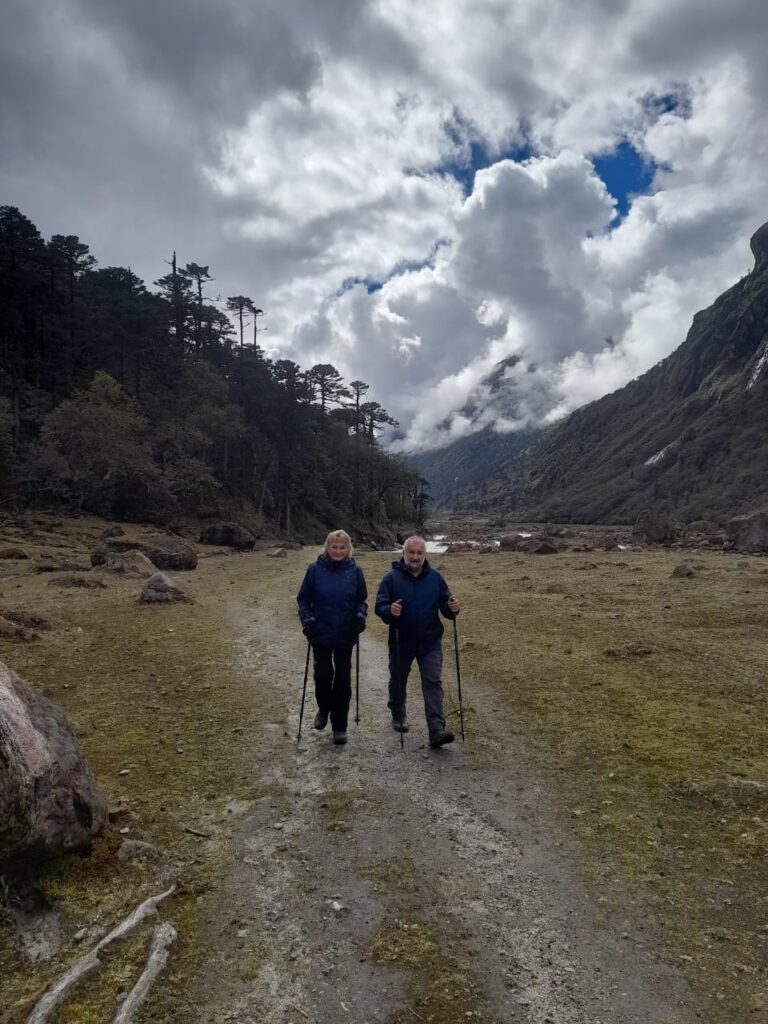
It is one of the moderate types trekking, because you are going above the 4156 meters at high. That’s why before you decide to do this trek you have to do some training. You will be walking 5 to 8 hrs a day; you need to have very good shoes. As you are going every day 500 to 1000 meters of altitude, you have to drinks lots of Water. During your trek you might get altitude sickness. Please read the symptoms of altitude sickness. If you have symptoms of ATS please tell our guide, so that he can take care of you.

List of things you need to bring: Dawn Jacket-1, Wind Proof-1, Gore-Tex-1, T-Shirt-4/6, Socks-4/6, Hat-1, Woolen Hat-1, Gloves-1pair, Trekking Boot-1Pair, Hiking shoe or Plipflop-1Pair, Raincoat-1, Water Bottle(1/2ltrs), Sunglass-1, Sun lotion, Towel, Thormel Trouser-2 pairs, Pool over-1, Sleeping Bag-1.

Best Months  to do this trek: Middle of September – November, Feb- April.

Rhododendron: Middle of March – April.
Contact us for any kind of information

Contact Information

Sher Bahadur Pariyar
Managing Director
+977 9851074484
Any questions about this trip? Call us and let’s plan your tour together!
Enquire Now
from
1980
Other Popular trips
Nepal
Royal Enfield- Bike Tour in Nepal
14 Days
Nepal
Please add a teaser description, so it can be displayed here!
17 Days
Nepal
Please add a teaser description, so it can be displayed here!
12 Days
Nepal
Less Touristic Trek - Makalu Base Camp Trek
21 Days
Nepal
The Tsum Valley Trek with Manaslu Circuit is a perfect blend of adventure, culture, and nature.
23 Days