Early in the morning wake up and drive to Airprot for the mount flight.
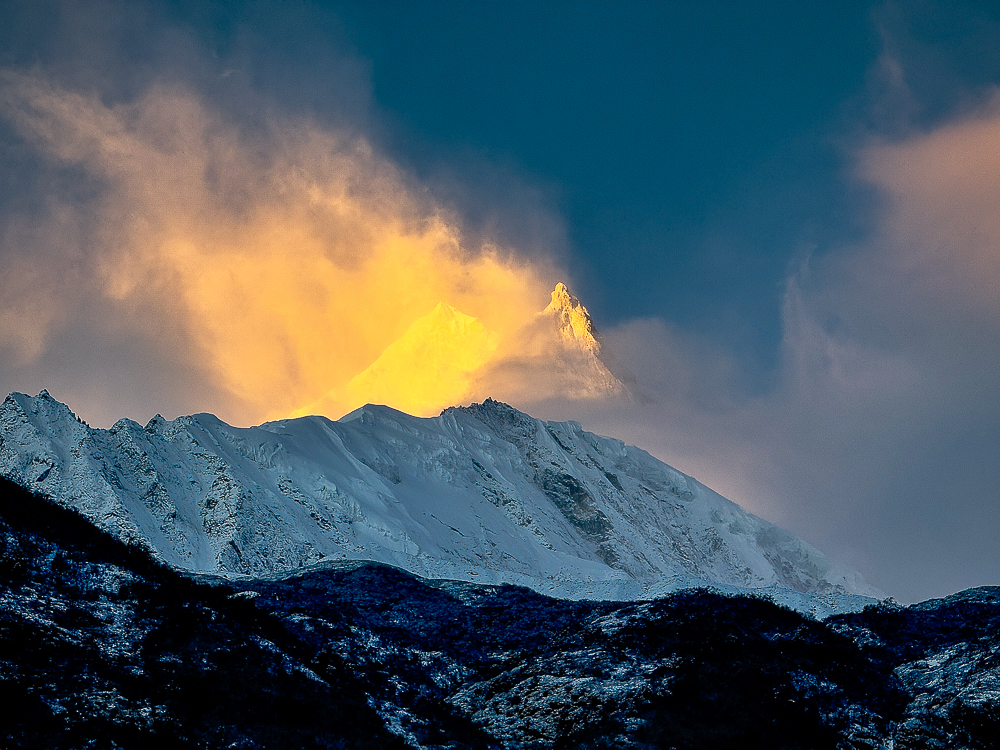
One of the must-see landmarks of Nepal is, of course, the highest peak in the world – Mount Everest. An awe-stricken silence comes close to matching the experience of a mountain flight. For one hour, you’ll fly over the Eastern Himalayan Ranges of Nepal where some of the highest peaks in the world including Mt. Everest lie for a surreal feeling as you come face to face with the world’s tallest and most enigmatic of Mountains. Even those visitors who like the rigors of a trek won’t miss the opportunity to “conquer” the mountains in one stunning swoop.
After breakfast at the hotel commence the sightseeing tour of Pashupatinath.
Pashupati Temple stands in the center of the town of Deopatan, in the middle of an open courtyard. It is a square, two-tiered pagoda temple built on a single-tier plinth, and it stands 23.6 meters above the ground. Richly ornamented gilt and silver-plated doors are on all sides.
On both sides of each door are niches of various sizes containing gold-painted images of guardian deities. Inside the temple itself is a narrow ambulatory around the sanctum. The sanctum contains a one-meter high linga with four faces (chaturmukha) representing Pashupati, as well as images of Vishnu, Surya, Devi and Ganesh. The priests of Pashaputinath are called Bhattas and the chief priest is called Mool Bhatt or Raval. The chief priest is answerable only to the King of Nepal and reports to him on temple matters on a periodic basis. The struts under the roofs, dating from the late 17th century, are decorated with wood carvings of members of Shiva’s family such as Parvati, Ganesh, Kumar or the Yoginis, as well as Hanuman, Rama, Sita, Lakshman and other gods and goddesses from the Ramayana.
Pashaputi Temple’s extensive grounds include many other old and important temples, shrines and statues. South of the temple, for instance, is Chadeshvar, an inscribed Licchavi linga from the 7th century, and north of the temple is a 9th-century temple of Brahma. On the south side of Pashupati temple is the Dharmashila, a stone where sacred oaths are taken, and pillars with statues of various Shah Kings.
The Bagmati River, which runs next to Pashaputinath Temple, has highly sacred properties. Thus the banks are lined with many ghats (bathing spots) for use by pilgrims. Renovating or furnishing these sites has always been regarded as meritorious.
Arya Ghat, dating from the early 1900s, is of special importance because it is the only place where lustral water for Pashupatinath Temple can be obtained and it is where members of the royal family are cremated. The main cremation site is Bhasmeshvar Ghat, which is the most-used cremation site in the Kathmandu Valley. The preferred bathing spot for women is the Gauri Ghat, to the north.
The Patan Museum Cafe has been crafted to complement the superb period ambience achieved by the architects and builders of the Museum itself. Located in the inner courtyard of the Keshav Narayan Chowk in Patan Durbar, the cafe will offer a mix of traditional and western delicacies and light meals in a setting unparalleled in the Kathmandu valley.
Patan city: Located about 5 km south of Kathmandu, Patan is one of 3 royal cities in the valley. A destination for connoisseurs of fine arts, Patan is filled with wood and stone carvings, metal statues, ornate architecture, including dozens of Buddhist and Hindu temples, and over 1200 monuments.
Patan is believed to have been built in the third century B.C. by the Kirat dynasty later expanded and enriched by the Licchavi and the Malla rulers in the medieval period. Patan Durbar Square, like its counterpart in Kathmandu, is an enchanting mélange of palace buildings, artistic courtyards and graceful pagoda temples. The former Royal palace complex is the centre of Patan’s religious and social life, and houses a beautiful museum.