THE HIMALAYAN KINGDOM LADAKH

India
Ladakh
Duration

15 Days

Group Size
Grade

Difficult

Max. Altitude
Ladahk: Lying in the rain shadow area of the Great Himalayas, Ladakh is a cold desert area and the most sparsely populated land in the whole world with just two people per sq km. It is perhaps the only place where one can get frostbite and sunburn at the same time while sitting in the sun and stretching out one’s legs in the shaded area. The peculiar climatic conditions of the region feature the freezing winds and the burning sun at the same time. The snow-covered expanse of this rugged terrain attracts tourists with its fantastic and panoramic views. This white paradise is surrounded by some of the highest mountain ranges of Great Himalayas and Karakoram ranges that are young and mighty in geological terms. An independent kingdom of the 10th century, Ladakh was continuously pestered by the periodical attacks of the Kashmiri Muslims in the 16th century until it was finally annexed to their state in the mid 19th century. One can see distinct influences of the different visitors to the place in the Ladakhi culture. Culture of Ladakh Ladakhis are known for their cheerful disposition and most of their festivals fall in winters, which serve as an excuse for social and convivial gatherings. In summers, archery competitions and native version of polo are quite common and especially among the Buddhists.People of LadakhThe people of Ladakh bore much resemblance to Tibetans and Central Asians with their round faces, short stubby noses and small ‘chinki’ eyes with pronounced cheekbones. The people of the mountains, they have good stamina are accustomed to manual labor. However, they are considered to be soft and plain at heart.Leh CapitalSituated at an altitude of 3505 m above sea level, Leh is to the east of Jammu & Kashmir and is the capital of Ladakh. Zanskar River flows through it and breathtaking sparking white snowcapped peaks surround the valley of Leh. A blending of barren desert and well-irrigated farms, the ruined Tibetan style palace of Leh is the first to attract the attention of the tourists.

Places you'll See

Highlights

Map & Itinerary

Arrival in Delhi and Transfer to your Hotel, if you have time sightseeing new and old delhi.
Arrive Leh, the capital of the ancient Buddhist Kingdom, greet by our representative and transfer to hotel. Rest of the day take complete rest for acclimatization to the arid high altitude of Leh (3505 m). Overnight in Hotel.
Morning start the guided tour of Stok Palace museum and Dalai Lama’s residence. Back to hotel for hot lunch. In the afternoon visit Leh town includes the imposing Leh Palace, Shanti Stupa (Japanese Pagoda) and Sankar gompa (monastery). Overnight in Hotel.
After breakfast we set off for a day excursion of Indus valley visiting Shey Palace- the first capital of ancient Ladakh, following visit the 16th Century Thikse monastery and further visit Hemis monastery- know to be the richest monastic establishment in Ladakh. Later retrace to Leh. If you wish you can make a leisure walk between Shey & Thikse, takes about an hour. Overnight in Hotel.
Morning start drive to Uletokpo (about 72kms./ 2hrs.), en route visit the huge open Buddha statue at Likir gompa and visit the 1000 year old Alchi Choskor (Religious Enclave), famous for the wooden carvings, stucco art & wall paintings/ frescoes. Arrive Uletokpo for overnight stay.
We start after early breakfast to Lamayuru (about 50kms./ 2hrs.), arrive and visit Yangdrung Gompa – known to be the oldest monastery in Ladakh. Later revert to Leh (about 120kms./ 3-4hrs.), en route visit the solitary Rizong gompa & Chulichan Nunnery.
Overnight in Hotel.
Today drive for about 135 km/ 6hr to Hunder Village, Nubra (“the forbidden Valley”), over crossing the worlds highest motorable Pass- Khardung la (5602m). On clear day you can enjoy the panoramic view of Ladakh, Zanskar and the Karakoram mountain ranges. Arrive and visit the 600 years old Hunder temple. O/n in Fixed Tented Camp.
Today in the morning we start walk from the camp to Samstanling gompa, takes about an hour. Visit the impressive gompa and later board the Jeeps and drive about 1 hour towards Panamik, en route short walk to visit Yarab Tso “the holy lake”. Further drive to visit the Hot Springs “the healing water”. Later transfer back to Hunder village.
Before depart to Leh we will visit the impressive Deskit Gompa is the branch of Thikse gompa. Later continue in our Jeeps for journey back to Leh via Khardung la. Arrive Leh and rest of the day free. O/n in Hotel.
After Breakfast drive (160 Kms) for Pangong Lake 14,500 ft, through Changla Pass 17,350 ft. (third Highest Motorable road in the world.). On arrival walking tour of Spangmik village and explore Pangong lake. Overnight in Fixed Tented Camp.
After Breakfast drive back to Leh. Arrive Leh and rest of the day free for your independent activities and shopping. Overnight Hotel.
Early morning transfer to KBR airport Leh and fly to Delhi. After arrival you will be transfer to Agara to View most beautiful moment made for Love Tajmahal. Transfer to Hotel and Free Evening. Agra has a rich historical background, which is amply evident from the numerous historical monuments in and around the city. The earliest reference for Agra comes from the epical age, when Mahabharata refer Agra as Agravana. In the sources prior to this, Agra has been referred as Arya Griha or the abode of the Aryans. The first person who referred Agra by its modern name was Ptolemy. Though the heritage of Agra city is linked with the Mughal dynasty, numerous other rulers also contributed to the rich past of this city. Modern Agra was founded by Sikandar Lodhi (Lodhi dynasty; Delhi Sultanate) in the 16th century. Babar (founder of the Mughal dynasty) also stayed for sometime in Agra and introduced the concept of square Persian-styled gardens here. Emperor Akbar built the Agra fort and Fatehpur Sikri near Agra. Fatehpur Sikri remained his capital for around fifteen years after which the city was left isolated in mysterious circumstances. Jahangir beautified Agra with palaces and gardens despite spending most of his time in Kashmir with which he was passionately attached. Agra came to its own when Shahjahan ascended to the throne of Mughal Empire. He marked the zenith of Mughal architecture, when he built the Taj in memory of his beloved wife Mumtaz Mahal. In his later years, Shahjahan shifted his capital to the new city of Shahjahanabad in Delhi and ruled from there. Shahjahan was dethroned in 1658 by his son, Aurangzeb who imprisoned him in the Agra Fort. Aurangzeb shifted the capital back to Agra till his death. After the death of Aurangzeb, Mughal Empire could not touch its peak and many regional kingdoms emerged. The post-Mughal era of Agra saw the rule of the Jats, Marathas and finally the British taking over the city
After breakfast you will be visiting the Taj mahal, here you will take enough time to enjoy the its Environment. Later you will be visiting theAgra Fort: Monuments Agra Fort is an astounding structure comprising of, sprawling Palaces, royal private rooms, harems, magnificent towers, bastions, ramparts, and awe-inspiring gateways, showcasing not only the political stature and power of Mughal Empire under Akbar, but also the advancement made in the sphere of art and architecture. Many of the red sandstone buildings, constructed during Akbar’s period, were demolished and rebuilt by his successors Jahangir and Shah Jahan. Itmad-ud-Daullah (Pillar of the state), originally known as Mirza Ghiyas Beg, was the father of Nur Jahan, wife of Mughal Emperor Jahangir. Mirza Ghiyas Beg is also the grandfather of Mumtaz Mahal, the wife of the emperor Shah Jahan, The mausoleum of Itmad-ud-Daullah was commissioned by his daughter Nur Jahan. This beautiful structure is located on the left bank of the Yamuna river, near the Yamuna Bridge railway station. Sikandara: Sikandara, near Agra, is famous for the beautiful mausoleum of Mughal Emperor Akbar. Construction of this aesthetic monument was planned and started by Akbar himself. But Akbar died before his mausoleum could be completed and his son Jahangir completed it. While executing the dream of Akbar, Jahangir made many modifications in the original plan of the building.The mausoleum of Akbar at Sikandara is just four kilometers from Agra. It can be easily reached from Agra in a very short span of time.
After tour you will be back at Hotel and have dinner at Hotel.
After breakfast drive back to Delhi and reset time free for shoping.
Transfer to International Airport for your further destination. You have can also additional Program, like Jaipur, Jodhapur, Udaipur. Also Possible to Fly Goa for beach Holiday, or Nepal for 1 week or Bhutan. Please feel free to mail us.

What's included

Accommodation throughout the tour on full board(breakfast, lunch & dinner).
Transportation using Non A/C MUV Jeep/s (Sumo Grand/ Scorpio/ Safari/ Tavera), for transfers, sightseeing's and overland journey as per the
programme. (4-5 pax / jeep).
Inner Line Permit and wildlife fee for Pangong Lake and Nubra valley.
Service of English speaking local Guide.
Monastery / monument/ museum entrance fees.
Airport assistance.
Applicable taxes.

What's not included

Any airfare.
Travel & medical insurance.
Camel ride in Nubra valley.
Any extra and optional tour then the above.

Dates & Availability

Start Date
Price
Availability
01.01.2026-15.01.2026
from 2500 USD €
Book Now >
01.01.2026-15.01.2026
from 2500 USD €
Book Now >
01.01.2026-15.01.2026
from 2500 USD €
Book Now >
01.01.2026-15.01.2026
from 2500 USD €
Book Now >
01.01.2026-15.01.2026
from 2500 USD €
Book Now >
01.01.2026-15.01.2026
from 2500 USD €
Book Now >
01.01.2026-15.01.2026
from 2500 USD €
Book Now >
01.01.2026-15.01.2026
from 2500 USD €
Book Now >
01.01.2026-15.01.2026
from 2500 USD €
Book Now >
01.01.2026-15.01.2026
from 2500 USD €
Book Now >

Travel Notes

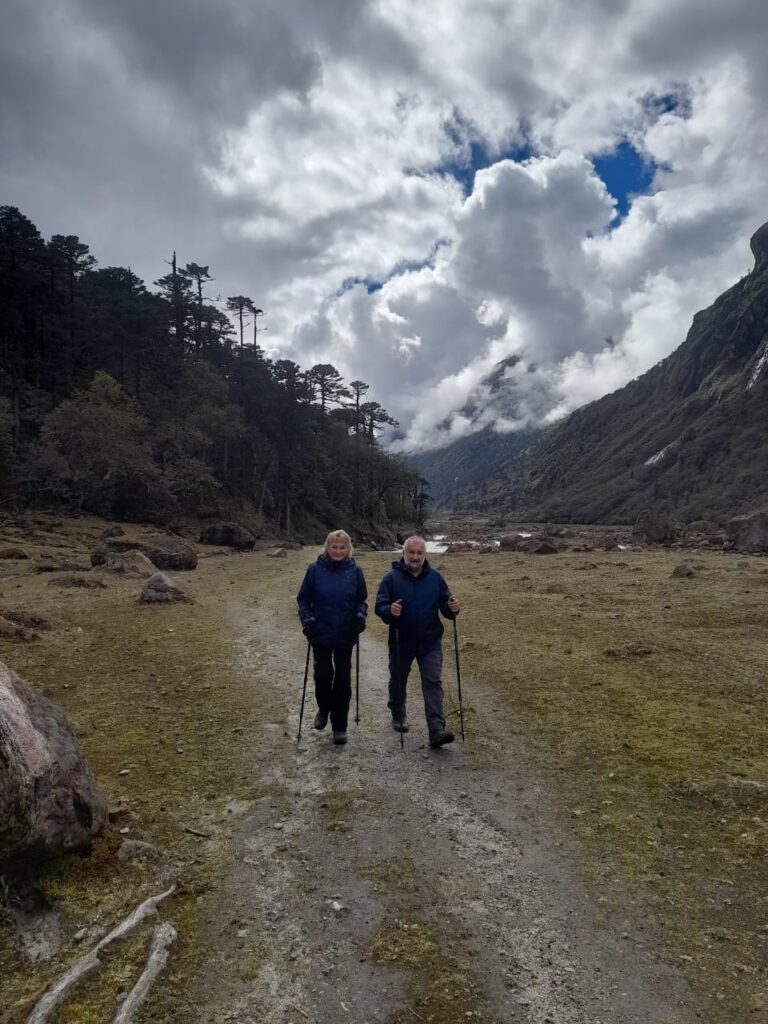
It is one of the moderate types trekking, because you are going above the 4156 meters at high. That’s why before you decide to do this trek you have to do some training. You will be walking 5 to 8 hrs a day; you need to have very good shoes. As you are going every day 500 to 1000 meters of altitude, you have to drinks lots of Water. During your trek you might get altitude sickness. Please read the symptoms of altitude sickness. If you have symptoms of ATS please tell our guide, so that he can take care of you.

List of things you need to bring: Dawn Jacket-1, Wind Proof-1, Gore-Tex-1, T-Shirt-4/6, Socks-4/6, Hat-1, Woolen Hat-1, Gloves-1pair, Trekking Boot-1Pair, Hiking shoe or Plipflop-1Pair, Raincoat-1, Water Bottle(1/2ltrs), Sunglass-1, Sun lotion, Towel, Thormel Trouser-2 pairs, Pool over-1, Sleeping Bag-1.

Best Months  to do this trek: Middle of September – November, Feb- April.

Rhododendron: Middle of March – April.
Contact us for any kind of information

Contact Information

Sher Bahadur Pariyar
Managing Director
+977 9851074484
Any questions about this trip? Call us and let’s plan your tour together!
Enquire Now
from
2500
Other Popular trips
Nepal
Royal Enfield- Bike Tour in Nepal
14 Days
Nepal
Please add a teaser description, so it can be displayed here!
17 Days
Nepal
Please add a teaser description, so it can be displayed here!
12 Days
Nepal
Less Touristic Trek - Makalu Base Camp Trek
21 Days
Nepal
The Tsum Valley Trek with Manaslu Circuit is a perfect blend of adventure, culture, and nature.
23 Days