Swyombhunath Stupa
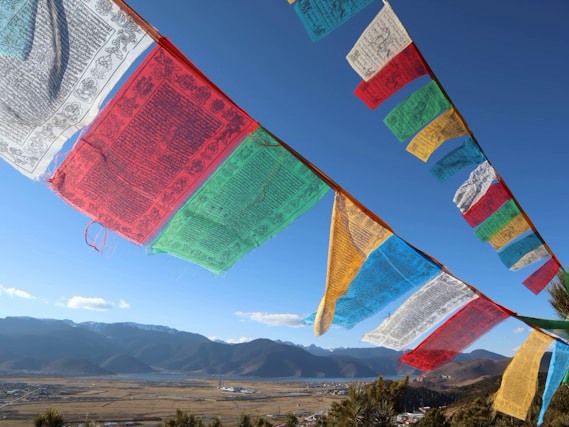
Swyombhunath Stupa: The Monkey Temple of Kathmandu: Swyombhunath Stupa is one of the most iconic and revered Buddhist monuments of Nepal, of the entire world. It stands on the top of a hill in Kathmandu Valley, commanding an all-encompassing panorama of the bustling city below and the surrounding mountain views including Mt. Langtang and Ganesh Himal. The stupa traces its origins to over 2,500 years ago, thus being one of the oldest religious sites in Nepal
Pashupatinath Temple
Temple is one among the holiest Hindu temples dedicated to Lord Shiva, located on the banks of the river Bagmati in Kathmandu, Nepal. This temple is a UNESCO World Heritage Site and a major spiritual and cultural landmark.Pashupatinath Temple is as popular as Kedarnath in India.
Bouddhanath Stupa
One of the largest and most important stupas in the world, Bouddhanath Stupa is situated in Kathmandu, Nepal. To all Buddhists around the world, it is a very important icon and embodies spiritualism and architecture. The origins of Bouddhanath Stupa date back to the 5th or 6th century during the Licchavi dynasty. According to legend, it was built by an old woman named Jadzima and her four sons as a tribute to the Buddha. The stupa’s construction is also linked to King Śivadeva and later restored by Tibetan lamas. Its location on an ancient trade route between Tibet and Nepal made it a center for Buddhist teachings and practices.
Patan Durbar Square
It is one of the three main Durbar Squares in the Kathmandu Valley, Nepal. Situated in Lalitpur, also commonly known as Patan, the place was established during the rule of the Malla kings, specifically during the 17th century when King Siddhi Narsingh Malla administered it. In fact, this is of much earlier origin, standing as part of Nepal’s cultural and architectural pride. The square now teemed with Newar art, craftsmanship, and devotion, signifying the zenith of Nepalese architecture and urban planning.
Kathmandu Durbar Square
Location Kathmandu Durbar Square, a UNESCO World Heritage Site, lies at the heart of Nepal’s capital city. Known locally as Hanuman Dhoka Durbar Square, its origins date back to the Licchavi period (4th to 8th century), though the majority of structures were developed during the Malla dynasty (12th to 18th century). Historically, this place was the palace of the Malla and Shah kings, the center of political and cultural life. It gets its name from the temple of the monkey god, Hanuman, at the entrance of the palace.
Bhaktapur Durbar Square
Bhaktapur Durbar Square, located in the heart of Bhaktapur, Nepal, is a UNESCO World Heritage Site that reflects the grandeur of the Malla dynasty (12th-18th centuries). The square was the royal palace courtyard of the Malla kings who ruled over Bhaktapur. The development of this architectural marvel began during King Yaksha Malla’s reign in the 15th century, with successive rulers adding temples, statues, and other features, making it a cultural and artistic hub.
Changunarayan Temple
Changunarayan Temple is among the oldest Hindu temples that exist in Kathmandu Valley, Bhaktapur, Nepal. It was built around the 4th century, is located over a knoll and is dedicated to Lord Vishnu, who has been referred locally as Narayan. According to a myth, the roots of this temple have been traced to the founding of this Changunarayan site based on the recovered idol of Vishnu from under a tree. Centuries of worship have taken place here, and its architecture certainly has reflections of the Licchavi dynasty.
Lumbini
Lumbini is one of the most holy places for Buddhists all over the world and is a UNESCO World Heritage Site. It is located in the Rupandehi District of Nepal, renowned for being the birthplace of Siddhartha Gautama, later known as Gautama Buddha, the founder of Buddhism. Historical evidence confirms Lumbini to be Buddha’s birthplace through many inscriptions that were found on the pillar of Mauryan Emperor Ashoka, dated 623 BCE. Its association with Lumbini derives from its hoary past. According to Buddhist tradition, Queen Mayadevi, on her way to her parental home, gave birth to Siddhartha under a sale tree in this serene grove. The site had great spiritual and historical value ever since.
Besides being the birthplace of Buddha, Lumbini has a load of archaeological and religious significance. The temple enshrines the exact spot where Buddha was born within the Mayadevi Temple, while the Ashoka Pillar is dedicated to the Indian emperor, who set it up upon pilgrimage. The sacred pond, Puskarini, where Mayadevi is believed to have bathed before childbirth, is another focal point.
Chitwan National Park
Chitwan National Park is Nepal’s first national park and was established in 1973. It has been designated as a UNESCO World Heritage Site since 1984, and this park was formed in the Terai lowlands with a view to conserving the fast dwindling wildlife in the region, including the one-horned rhinoceros and the Bengal tigers. Its history as a protected area dates back to the early 20th century when it served as a royal hunting ground. Over time, concerns over poaching and habitat loss raised several eyebrows, and the government declared it a national park, thus making it a cornerstone for Nepal’s conservation efforts.
Sagarmatha National Park
Sagarmatha National Park in the Solu-Khumbu region, Nepal, was established in 1976 and was declared a UNESCO World Heritage Site in 1979. The park takes its name from Sagarmatha, which is what Mount Everest is known as in Nepali. Sagarmatha National Park comprises an area of 1,148 sq. km., and it is also part of the Himalayas characterized by rugged terrain, deep valleys, and popular peaks: Everest, 8,848.86 m; Lhotse; and Nuptse. It is a spiritual landscape as well, with many Sherpa villages, ancient monasteries, and cultural landmarks reflecting the local Buddhist traditions.